Chore Chart by Age Printable (Free PDF)
WHAT IS THIS CHORE CHART BY AGE? Most chore charts fail for one simple reason: they were not made for your kid’s age. A chart that asks a four-year-old to “clean the bathroom” sets everyone up for tears, and a chart that asks a twelve-year-old to “put toys away” gets ignored on principle. This free…
WHAT IS THIS CHORE CHART BY AGE?
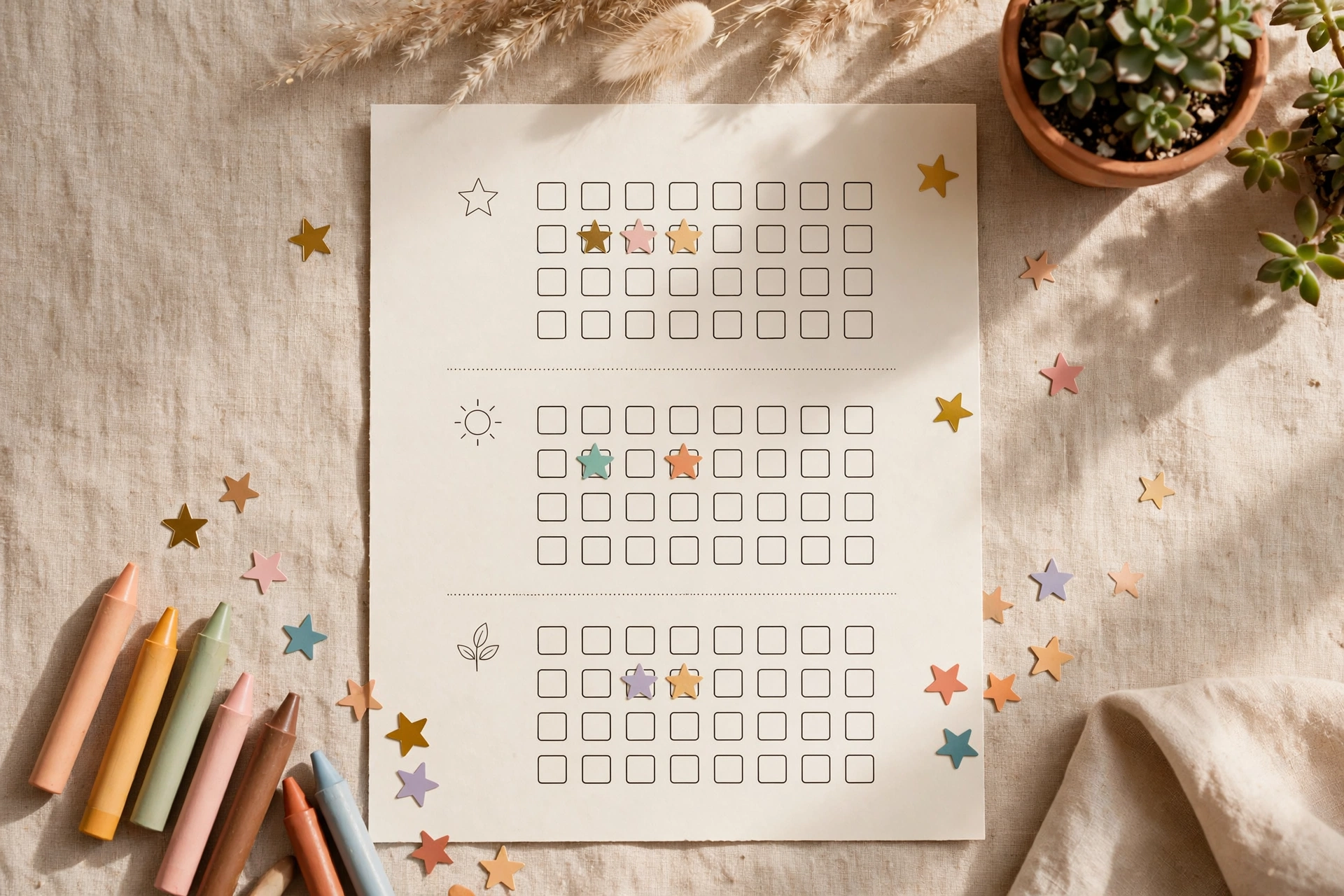
Most chore charts fail for one simple reason: they were not made for your kid’s age. A chart that asks a four-year-old to “clean the bathroom” sets everyone up for tears, and a chart that asks a twelve-year-old to “put toys away” gets ignored on principle. This free chore chart by age printable fixes the mismatch — three age-banded sections (ages 3–5, 6–9, and 10+) with chores that are actually right for each stage, each with its own checkboxes and a reward line. This chore chart by age is free to download – print as many copies as you like.
It is for parents who want chores to build responsibility instead of starting fights. The secret is developmental fit: preschoolers need short, concrete, one-step tasks with visible results; school-age kids can handle multi-step jobs and daily routines; tweens and teens can own whole zones and understand the “why” behind the work. When the chore matches the capability, kids feel competent instead of criticized — and competence is what turns chores from a battle into a habit.
Use one section per child, or use all three if you have kids across the bands. The chart works as a weekly system: print a fresh copy each Monday, let each child tick their boxes through the week, and review the reward line together on Sunday. Pair it with our kids morning routine checklist — chores and routines are the two halves of an independent kid.
Table of Contents
WHAT’S INSIDE THIS CHORE CHART BY AGE
AGES 3–5 SECTION
Eight short, concrete chores for preschoolers: put toys in the bin, put dirty clothes in the hamper, wipe the table with a damp cloth, help feed a pet, put books back on the shelf, throw trash in the bin, help carry light groceries, and make the bed with help. Every task is one step, physical, and finishable in under five minutes — the attention-span sweet spot for this age. Tasks use action words a preschooler understands: put, wipe, throw, carry.
AGES 6–9 SECTION
Eight chores for school-age kids who can follow multi-step directions: make the bed alone, set and clear the table, sort laundry by color, fold simple clothes, dust reachable surfaces, water plants, take out a small trash bag, and tidy their room daily. This is the age where “daily” starts to matter — the chart builds the rhythm of jobs that happen every day without being asked twice.
AGES 10+ SECTION
Eight real responsibilities for tweens and teens: full laundry cycle (wash, dry, fold, put away), clean a bathroom, vacuum or mop floors, cook one simple meal a week, take all trash and recycling out, walk or feed pets independently, clean out the fridge monthly, and mow or yard work seasonally. These are whole-zone jobs — the kind that teach the actual standard of “done.”
REWARD AND WRITE-IN LINE
Each section ends with a reward line and a blank write-in row. Decide the reward together upfront — screen time, a special outing, choosing Friday’s dinner — and write it on the chart. The blank row is for your family’s own chores: the weird, specific jobs every household has. Rewards work best when they are earned weekly and named in advance, not negotiated after the fact.
HOW TO USE THIS CHORE CHART BY AGE
- Print the chart and circle the section for each child — one section per kid. If a child is between bands, start with the lower one for a week; success builds faster than struggle.
- Walk through the chores together the first time. Show, don’t just tell: do the task side by side once so “clean the bathroom” means the same thing to both of you. The first week is training, not testing.
- Agree on the reward and write it on the line. Weekly rhythms beat daily bribes — a small weekly reward for a mostly-ticked chart teaches consistency better than a treat per chore.
- Let kids tick their own boxes. The tick is the point: visible progress is motivating at every age, and a child who marks their own work owns it in a way a parent-marked chart never achieves.
- Keep expectations age-honest. A preschooler’s “made bed” will look like a lumpy blanket — praise the doing, not the result. Standards rise with age; the chart’s bands already encode that.
- Review on Sunday, reset on Monday. Celebrate the ticks, ignore the misses lightly, adjust anything that clearly did not fit. Print fresh copies weekly — a new sheet is a clean slate, and clean slates keep kids (and parents) from carrying last week’s failures forward.
PRINTING TIPS
Print at “Actual size” or 100 percent scale so the checkboxes stay easy for small hands to tick. Standard 80 GSM paper is fine for weekly use. For a reusable system, laminate the sheet or slip it into a dry-erase sleeve — one copy per child then lasts all year with a wipeable marker. Both A4 and US Letter versions are included. The black-and-white design prints cleanly on any home printer and photocopies well if grandparents want in on the system.
FREQUENTLY ASKED QUESTIONS
What if my child refuses to do chores?
Start smaller, not louder. Drop to the easiest two chores in their band, do them together for a week, and let the reward do the talking. Refusal usually means the chore felt too big or the standard felt unclear — both are fixable. Our morning routine checklist uses the same start-small principle for routines.
Should younger kids get the same reward as older ones?
No — scale it. A preschooler might earn a sticker per day and a small treat weekly; a teen might earn allowance tied to the full week. What matters is that the reward is agreed upfront, achievable, and delivered on time. Late or forgotten rewards kill the system faster than any chore refusal.
How many chores per day is realistic?
The chart lists eight per band, but that is the menu, not the daily requirement. A good rule: age in years equals roughly the number of daily chore-minutes a child can sustain happily — a 5-year-old gets 2–3 short chores a day, a 12-year-old can handle a real daily set. Tick what fits; the chart survives partial weeks.
Can I use this for multiple kids?
Yes — that is what it is built for. Print one copy per child and have each use their own age band, or print one copy and have siblings share bands. Many families post all the charts on the fridge side by side; a little sibling visibility is surprisingly motivating.
DOWNLOAD YOUR FREE CHORE CHART BY AGE
Stop assigning chores that don’t fit. Download the free chore chart by age printable PDF below in A4 or US Letter, circle your child’s band, and start this week. Right-sized chores, ticked boxes, fewer fights — that is the whole promise. Your chore chart by age is ready below in both A4 and US Letter.
Free forever · No email needed · A4 + US Letter included.